

AI-driven learning that evolves, responds, and improves workforce performance in the moments that matter.
© Copyright asendio 2026
AI-driven learning that evolves, responds, and improves workforce performance in the moments that matter.
© Copyright asendio 2026
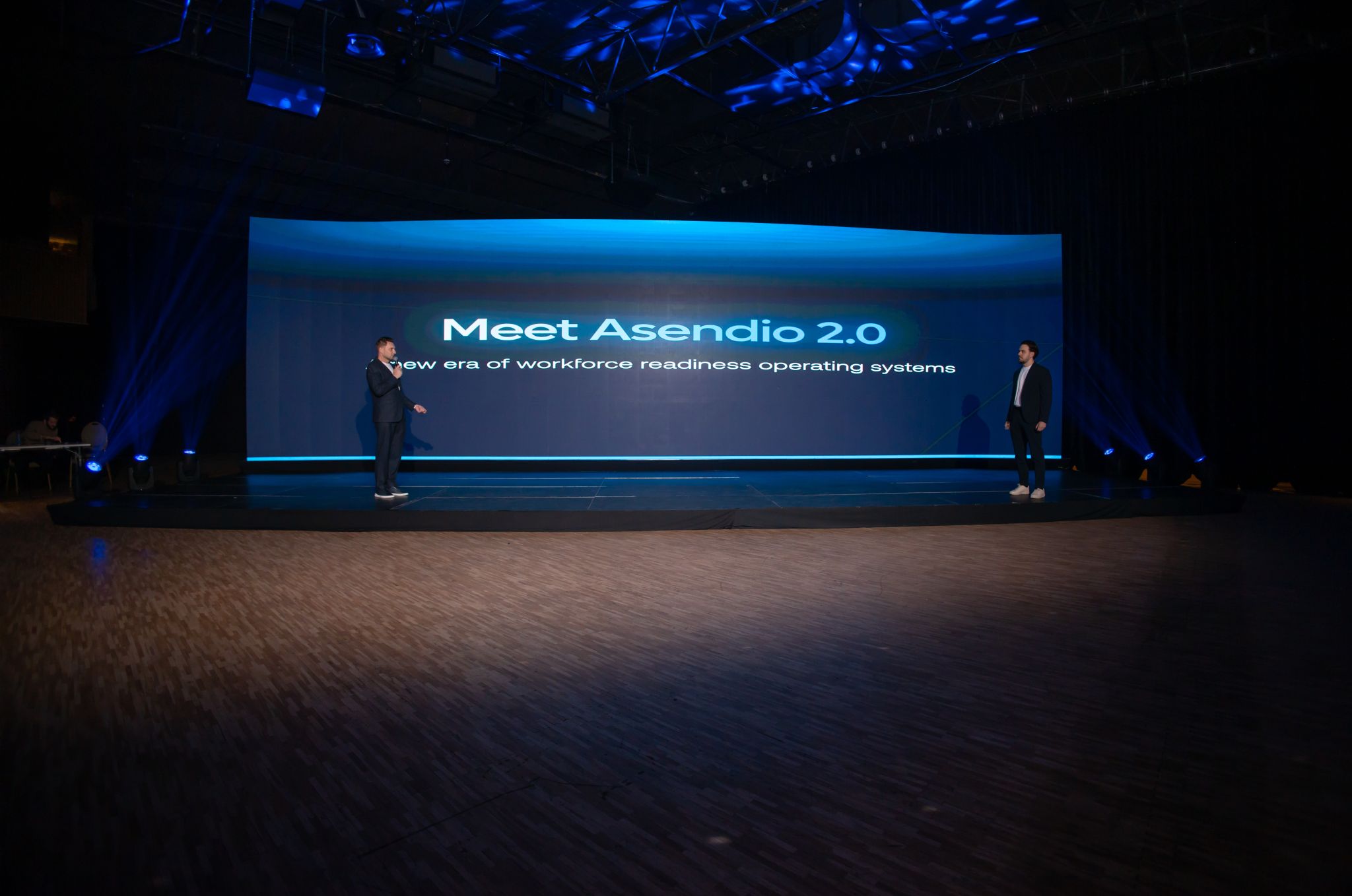
At the recent kick-off event of SPEEEX and Sunrise, one idea stood out above all:
Workforce readiness is not a training event. It is a continuous operational cycle.
This wasn’t just a statement. It set the tone for the introduction of Asendio-and a shift in how organizations think about performance, capability, and growth.
The End of “One-Time” Readiness
For a long time, readiness has been treated as a milestone.
An onboarding phase.
A training session.
A one-time effort to prepare people before they step into their roles.
But as highlighted during the keynote, this approach no longer reflects reality.
In fast-moving environments, the moment training ends is often the moment gaps begin. Skills need constant updating. Expectations evolve. And without continuous support, even the best-trained teams fall out of sync with the demands of their work.
What the Event Made Clear
The conversation at the kick-off wasn’t about improving training.
It was about moving beyond it.
Because readiness doesn’t happen before work starts-it happens within it.
Every interaction, every decision, every new challenge becomes a moment where employees either move forward with clarity or hesitate without it. And those moments define performance far more than any isolated training ever could.
From Preparation to Continuous Enablement
This is where the shift becomes tangible.
Organizations are beginning to move:
from scheduled training → to real-time guidance
from static knowledge → to applied capability
from one-time onboarding → to continuous development
The focus is no longer on how much employees have learned, but on how effectively they are supported while working.
Introducing a New Operating Model
This is the foundation behind Asendio.
Introduced during the event as a new kind of workforce operating system, it represents a move toward embedding readiness directly into daily operations.
Instead of separating learning from performance, it connects them.
Instead of reacting to gaps, it helps prevent them.
Instead of treating readiness as a phase, it turns it into a constant.
Because when readiness becomes part of how work happens, performance stops being unpredictable.
Uncover Insights in Our News, Blog, and Whitepaper Sections
-1765807061028.png?Expires=1786318323&Key-Pair-Id=KRA0L08OBFIGO&Signature=y5jJ3HK7fhOU1eWpL5kcJ0Gk3vaVijh9FPr80ALdKmCd9fEIO~IwQMup3V8SUwi~DkZB7DcElrDvi1b-4Xk9D9UFoOmJ5LoskRZvL~t7PHTlqggyF~vdgSHQjmNK7~FJFhGo5WdoOpRl2Bc8i-cb0uIDtw8yHQaJseVOMtYh1bNTNiQihvHgD-eOZYIKk2Wh5ROiiKCIi40kXi0fMexNZ4sxEskRDa~doD9ypQLodicjC~rBYZe6CNZAEJFuam5y1rPzkE5kGfKM8QnG~fd6tUGaYUVecC1uqsmH0tzAPMvJd4c4Az8~9caCUsvBXzFBZbvE~wwJwAKBgMQc8JZiow__)
-1765806783198.png?Expires=1786318323&Key-Pair-Id=KRA0L08OBFIGO&Signature=lN8CPhPv16Y3DFIi084Xbih1M7OCv2PC0TTxJLGpEx1BWkEhUOpYnfJRS~o0ooyo43WWliq0wrxho9ntcNOJ3MbDImCKsLTPVeWuYbNi2rTF6QAJ4Ml8z8shnJHGRRFI7ObVTtw-xU0nrskOzcnXMLqcxEF2-~zYIq6Aozc-z3zdq-NFFN7BWYiFfzecx4CoapL~x8kvqfiioNyCRyxjn1KdiCog8xj2iZ7KSvWNkS42TpCzQxNNdO2gHyJBm5YEW~eZBbzX2727ZEV6gDlQL3g~Q7cEZH6s7lgQlj136wZ0MBjqbwE6GGPQnYyvFmXzFmhGsYsaqcODCJ1f4pqPKA__)
-1765806541148.png?Expires=1786318323&Key-Pair-Id=KRA0L08OBFIGO&Signature=l0pLRK5ACWrzwJiomS7Rh1LBjQ2wKnaFiSC~TPN3iU6qmPhhrR~8hvqL3Cd2dbcVepwkNKePwlCfVtU9yADuHCCVYi3lvBuA-weXYl124a0OoNSgP9nzIMCeE8FxH4SmqlAE9t5eaFXiOu~SMpUuE0OofyJOuGO-Sp5S8gnhG~a1e1QJlaYoQWtcRz3hAQlGP92gV5RwtutvtpUivasOY9FegLTpaLLjSpQp3qDE8R2pjWZ3gyRGf2lWCtHfmqOGyXfzPHr9DNYgzPrIjo-x19kMt-8MCOF2rUC3b1CDMNSSxZLW3JHMbNUA~YgPGBcpQRXqC1zYq2d3bA8hmiBxxg__)
-1765806158685.png?Expires=1786318323&Key-Pair-Id=KRA0L08OBFIGO&Signature=H25Q9v0Mhx-~Ru3-rsnr8Is-UaC-LeTRUeZS5FD~jT5fDXZvAKXHMBC3ncoiPnkkFirikzW2CYflXLSyIJAPUsNDq60f~qtli~KFt7711VQu87Yceu6~Ole4HJl-TO~lT3Rvan7o5buPET0I541zC~7JIra1EWgsIUi4JEROsn89F3OPrHlYJvdSAteactdvAoeFw0DjGZ8hIbhNFKzx0xQ~IzF0eXwWjADg4GW-StsT82s0DBhHPHzyB~hrbf2xG37S9iesGmR6puC4Bg8wDXdpf~NI6JKOF2Y2Z4aHRWSNdb4AADwTY8luGTG-l1XwucprTCkE-m3Yt-DT4D2r5A__)

-1765548305787.png?Expires=1786318323&Key-Pair-Id=KRA0L08OBFIGO&Signature=fHC1SK2HEUK0EiIG9pKHIVnJ3lgXkpCwVlHYem24aIZtRXXt-olUgKNWqifi4~qtpESfpti9E-EWmKTP4ea6PSCtjj7XyPVOiS9tstA1qhoJFNadhaQ5qjjj9422C3V27MDsV29lFmwPOIyi-pS8DibYuvdFBxKTHeuvaRQF6mjmzs5VagkmpWzgTCuS3uLxc47-crbIsYUFOE3bq9sikG0XgPRlybnwTsZmnPiw7eVqNm5S4gQgdCoitVD91hqxl0KCBmDc~ARxbiF-3l3-Ff8tMjQ3m1PLCo5uaoMkohedqQrTyljUeeKr9KiXiX1l5IyQuxDs6VjV83E296stig__)